

Waterproofing Membrane Thickness: Why It Matters for Project Performance

When choosing waterproofing membrane, thickness is usually the first factor that the purchaser compares. For different types of membranes and construction scenarios, common thicknesses include 1.2mm, 1.5mm, 2.0mm, and even thicker specifications.
However, merely looking at the thickness is not sufficient to determine if the membrane is suitable for the project. Thick sheets may have advantages in certain conditions, but indicators such as tensile strength, elongation rate, puncture resistance, reinforcing layer performance, flexibility, and environmental aging resistance also determine the final usage effect.
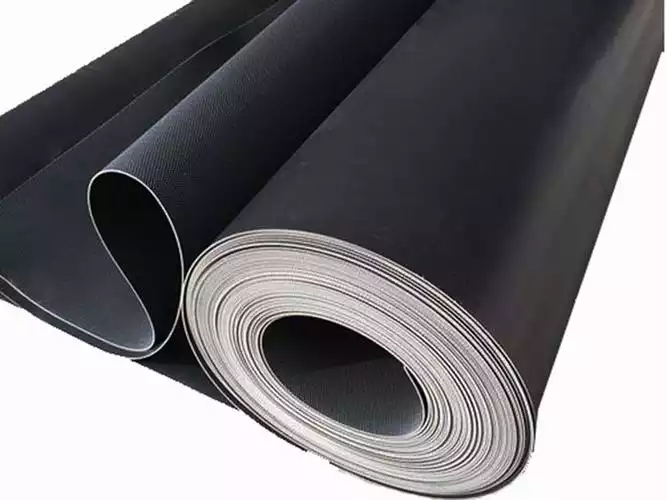
How Waterproofing Membrane Thickness Affects Performance
The thickness of the waterproofing sheet directly affects the performance of the entire waterproofing system in resisting mechanical external forces, adapting to structural displacement, and long-term outdoor use. However, the effect brought by the thickness is also closely related to the structural design of the sheet and the performance of the raw materials. When selecting the thickness of the sheet for a specific project, the following factors need to be given special consideration.
Mechanical and Puncture Resistance
During transportation, laying, backfilling, maintenance, and subsequent construction stages, waterproof membranes may be subjected to various mechanical external forces. Sharp edges and corners of the base layer, construction tools, foot traffic by workers or stacking of building materials all pose the risk of puncturing or tearing the membranes.
The thickness of the membrane affects the material’s physical strength, especially when the on-site conditions are harsh. However, the thickness needs to be comprehensively evaluated in conjunction with the puncture resistance, tear strength, reinforcing layer and material formulation.
For example: If the structural design of the membrane itself does not focus on puncture resistance, simply increasing its thickness may not necessarily result in a better puncture resistance effect.
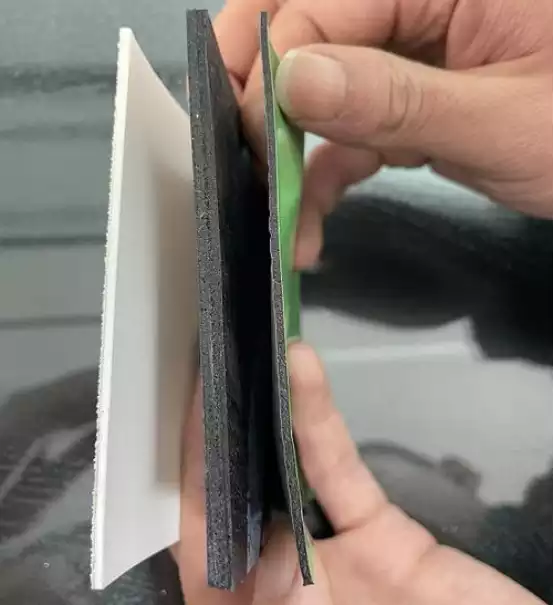
Movement and Crack Bridging
The waterproofing system may need to accommodate displacements caused by thermal expansion, movement of the substrate, or minor cracks. This is particularly important for concrete structures and components, as they will undergo displacements over time.
Thickness is only one part of this consideration. Elongation, flexibility, reinforcement, and membrane formulation can have a significant influence on how the material responds to movement.
Therefore, when crack-bridging performance is important, buyers should review the complete technical data rather than selecting a membrane based only on its nominal thickness.
Durability Under Service Conditions
The service environment also affects membrane performance. Roofing systems may experience UV exposure and repeated temperature changes, while underground structures can be exposed to soil pressure, water pressure, and mechanical stress during backfilling.
A thicker membrane may provide additional material thickness, but long-term durability also depends on properties such as heat resistance, low-temperature flexibility, weather resistance, chemical resistance, and aging performance.
This is why membrane thickness should always be evaluated in relation to the conditions the waterproofing system will face throughout its service life.
Is a Thicker Membrane Always Better?
No. A thicker waterproofing membrane is not automatically the better choice.
Increasing thickness can be beneficial when a project has higher mechanical or puncture risks, but it may also increase material consumption and affect handling or installation. More importantly, thickness cannot compensate for inadequate performance in other critical properties.
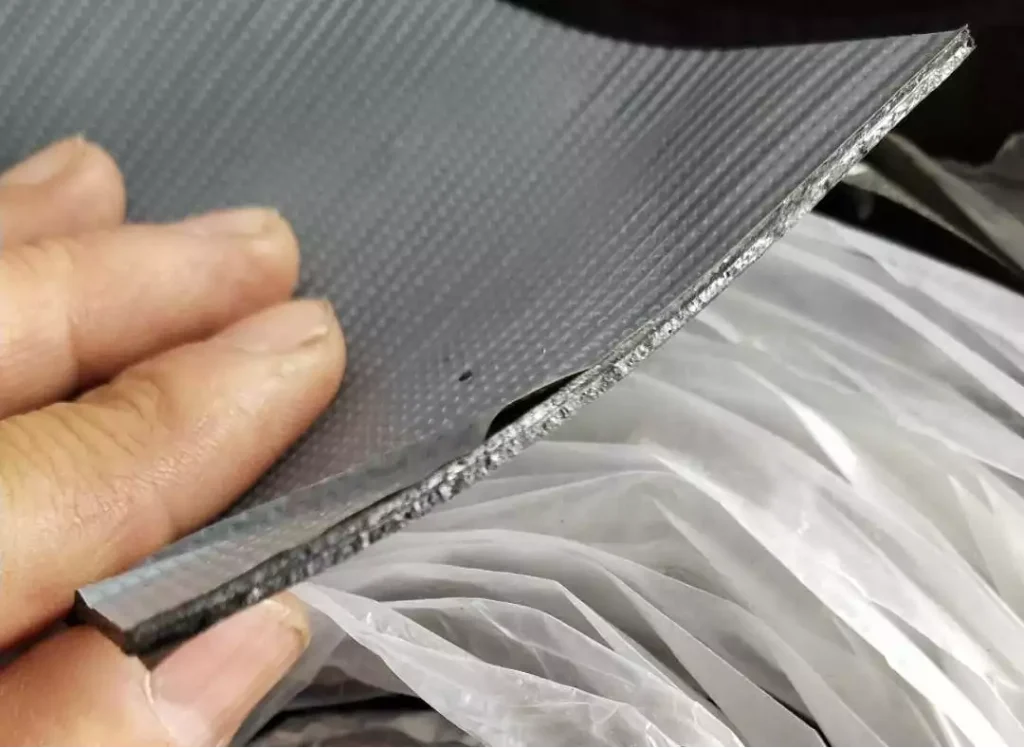
The appropriate specification depends on the project conditions.
| Project Condition | Key Considerations |
| Low mechanical exposure | Standard thickness may be sufficient |
| High puncture risk | Thickness + puncture resistance |
| Uneven substrate | Thickness + tear and puncture resistance |
| Significant substrate movement | Thickness + elongation + flexibility |
| High UV exposure | Thickness + UV and weather resistance |
| Heavy construction activity | Thickness + mechanical protection |
For example, an underground project with a high risk of mechanical damage during backfilling may require a membrane with suitable thickness and puncture resistance. In contrast, a project with significant substrate movement may place greater emphasis on elongation and flexibility.
The objective is not to select the thickest membrane available, but to select a specification that provides the required performance for the project without adding unnecessary material cost or installation difficulty.
What Should Buyers Check Besides Thickness?

Two membranes with the same nominal thickness may not exhibit the same performance characteristics. This is because of differences in formulation, composition, method of production, among others.
For this reason, professional buyers should review the technical data sheet (TDS) rather than comparing thickness alone.
| Property | Why It Matters |
| Thickness | Indicates the physical build of the membrane |
| Tensile Strength | Indicates resistance to pulling forces |
| Elongation | Indicates ability to accommodate movement |
| Tear Strength | Indicates resistance to tearing |
| Puncture Resistance | Indicates resistance to mechanical damage |
| Low-Temperature Flexibility | Indicates performance under cold conditions |
| Heat Resistance | Indicates stability at elevated temperatures |
| Water Tightness | Indicates the membrane’s ability to prevent water penetration |
Properties will be different for different types of membranes and their applications. Buyers must make sure that they know about the appropriate testing methods, standards, reinforcement, size, installation, and many other details specific to a particular project.
Rather than checking whether the thickness of the membrane is 1.5 mm or 2.0 mm, a more productive purchasing strategy will be to ask whether the entire list of properties fits the needs of the application.
Choosing Membrane Thickness for Different Applications
The appropriate waterproofing membrane thickness can vary significantly between applications because the risks and service conditions are different.
| Application | Main Factors to Consider |
| Roofing | UV exposure, weather, temperature changes, maintenance traffic |
| Basement & Foundation | Soil pressure, water pressure, puncture risk, backfilling |
| Parking Structures | Mechanical loads, abrasion, traffic and impact |
| Water Structures | Water pressure, continuous water exposure, substrate movement |
For roofing, membrane selection should account for weather exposure, temperature fluctuations, UV radiation, and the level of maintenance traffic expected on the roof.
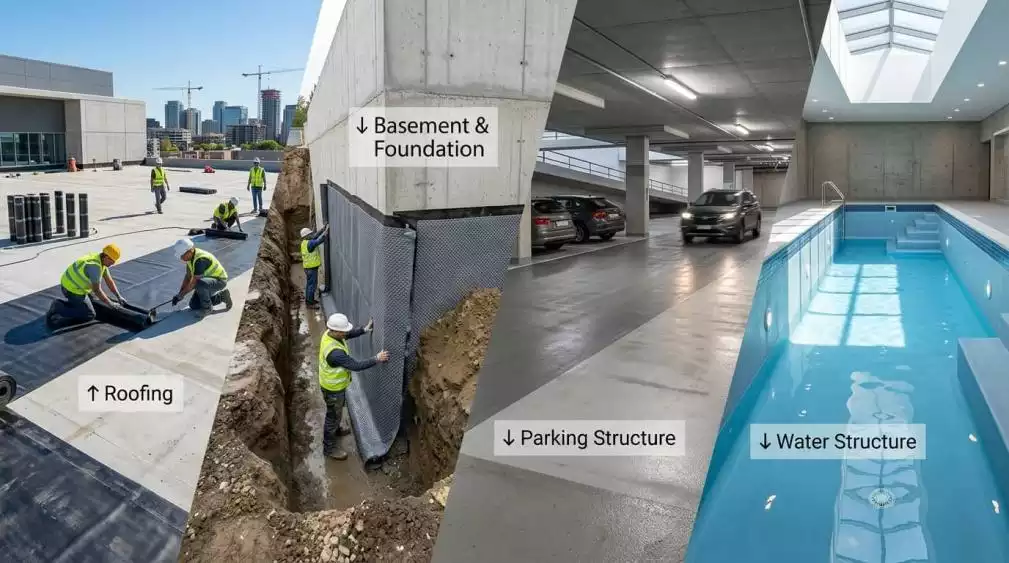
For basements and foundations, mechanical protection is particularly important during installation and backfilling. Thickness should therefore be considered together with puncture and tear resistance and the overall waterproofing system design.
Parking structures can involve greater mechanical loads and traffic-related abrasion. The membrane system may therefore require appropriate mechanical properties and protection layers in addition to a suitable thickness.
Water structures are constantly immersed in water and subjected to static water pressure, which imposes high requirements on the waterproofing effect and the overall integrity of the system. When evaluating the thickness of the material for selection, the flexibility of the material, its bonding ability, the reliability of the joints, and the conditions of the base layer all need to be taken into consideration simultaneously.
There is no single waterproofing membrane material thickness that can be suitable for all projects. The appropriate specification depends on the type of membrane material, the application location, the condition of the base layer, the environmental conditions, the mechanical load, and the design requirements of the project itself.
For project-specific applications, HUAYU provides waterproofing membrane solutions with different specifications and technical properties. Buyers can evaluate membrane thickness together with the relevant technical data to select a solution suited to the actual performance requirements of their projects.