

Pre-Applied vs Post-Applied Waterproofing Membranes: Which Is Right for Your Project?

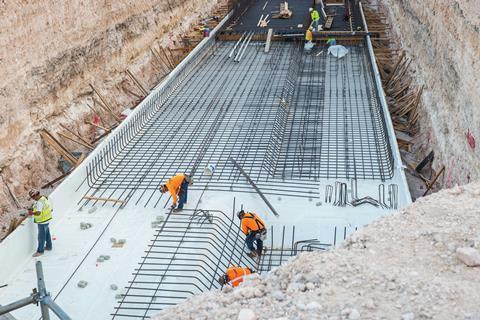
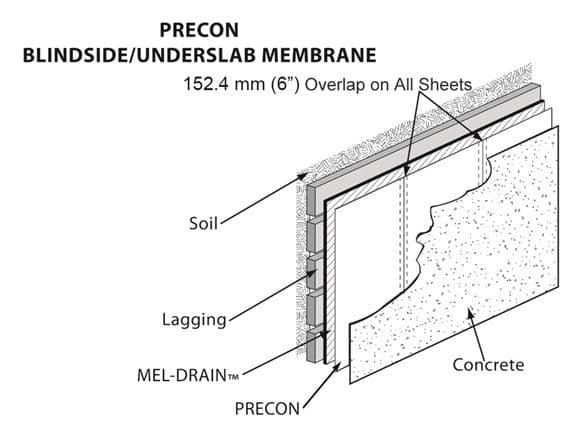
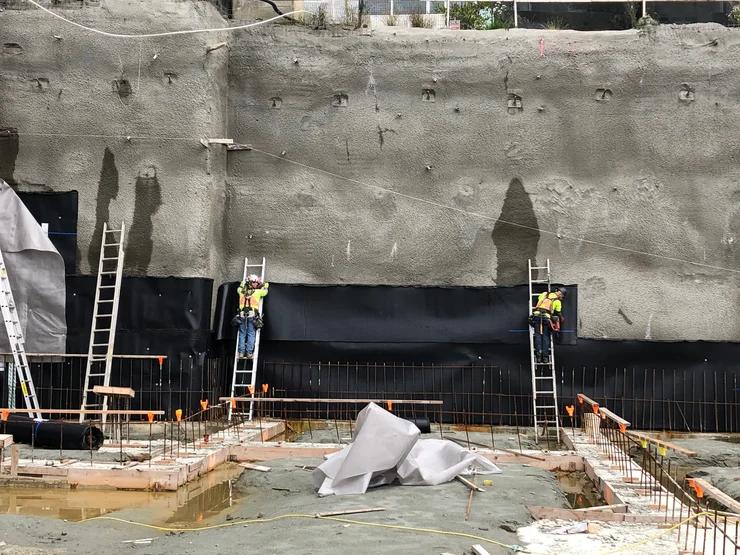
- Pre-applied waterproofing membranes are installed before concrete is poured. They are mainly used beneath foundation slabs, raft foundations, and against blindside basement walls, where waterproofing must be completed before the concrete structure is built.
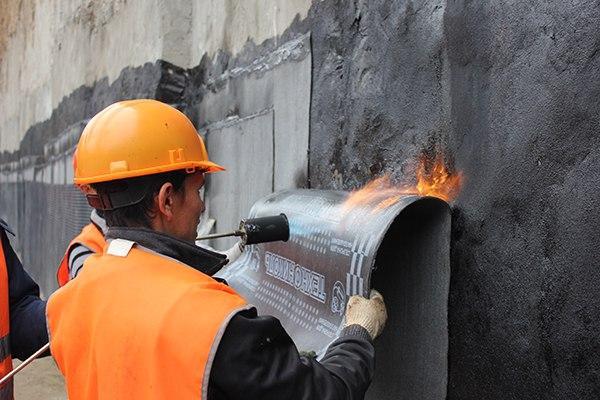
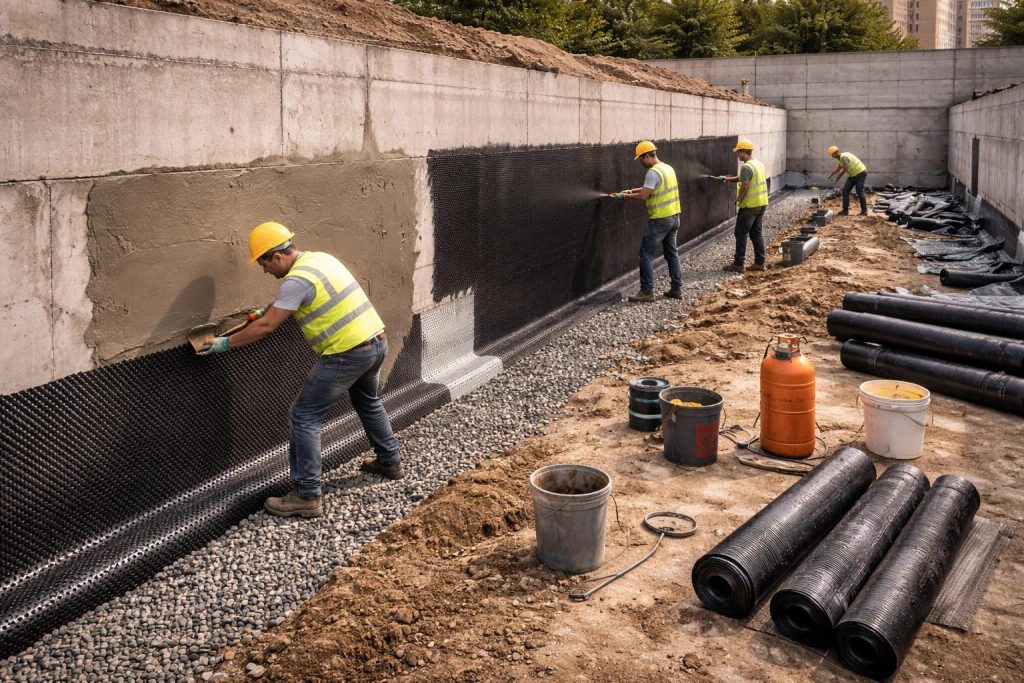
- Post-applied waterproofing membranes are installed after the concrete has hardened. They are commonly used on accessible basement walls, retaining walls, and existing concrete structures, where the exposed concrete surface allows the membrane to be applied directly.
The key differences are installation timing, application surface, and concrete bonding method. Pre-applied membranes bond with freshly poured concrete, while post-applied membranes are applied to hardened concrete. The choice depends on foundation design, site accessibility, groundwater conditions, and construction sequence.
Pre-Applied vs Post-Applied Waterproofing Membranes: Key Differences
| Comparison | Pre-Applied | Post-Applied |
| Installation timing | Before concrete pouring | After concrete construction |
| Installation surface | Blinding concrete or retaining structure | Hardened concrete surface |
| Concrete bonding | Bonds with subsequently poured concrete | Bonds to cured concrete through adhesive, primer, or other bonding systems |
| Substrate requirements | Prepared base or retaining surface | Clean, sound concrete with suitable moisture conditions |
| Construction conditions | Requires coordination with reinforcement and concrete placement | Requires access to completed concrete surfaces |
| Common materials | HDPE, EVA, polymer composite membranes | SBS, APP, self-adhesive membranes, polyurethane coatings |
| Typical thickness | Product-dependent, commonly 1.2–4 mm for some polymer systems | Product-dependent; commonly 3–4 mm for SBS sheets, with separate specifications for liquid coatings |
| Key performance requirements | Concrete adhesion, puncture resistance, tensile strength, elongation | Concrete adhesion, tensile strength, elongation, crack-bridging capability |
| Main construction concern | Damage during reinforcement installation and concrete pouring | Poor substrate adhesion and damage during backfilling |
| Typical applications | Foundation slabs, raft foundations, blindside walls | Accessible basement walls, retaining walls, existing structures |
Pre-applied and post-applied describe installation methods, not fixed material categories. Some self-adhesive and polymer membranes are designed for pre-applied, wet-applied, or post-applied applications. The product must be selected according to its specified installation method rather than its material name alone.
Pre-Applied Waterproofing Membranes – Best for Foundation Slabs and Blindside Construction
Materials and Technical Parameters
Pre-applied waterproofing mainly uses HDPE, EVA, and other polymer composite membranes designed to bond with subsequently poured concrete.
Key technical parameters include:
- Thickness: Common options include 1.2 mm, 1.5 mm, 1.7 mm, 2 mm, 3 mm, and 4 mm, depending on membrane type.
- Tensile strength and elongation: Indicate resistance to tensile stress and structural deformation.
- Puncture resistance: Important because the membrane is exposed to reinforcement supports, tools, and construction activities.
- Concrete adhesion: Determines how effectively the membrane bonds with fresh concrete.
Water migration resistance: Indicates the ability to restrict water movement between the membrane and concrete.
Performance and Construction Characteristics
The main advantage of pre-applied membranes is their bonding with subsequently poured concrete. A properly bonded system helps prevent water from migrating behind the membrane if localized damage occurs.
Unlike post-applied systems, pre-applied membranes must withstand construction activities before concrete placement. Puncture resistance, lap integrity, and bonding performance are therefore particularly important.
Their installation conditions also differ: the membrane is positioned beneath the foundation slab or against a retaining structure before the permanent concrete structure is formed. Once concrete is poured, the waterproofing layer becomes concealed and difficult to inspect or repair.
Typical Applications
Foundation slabs and raft foundations: The underside becomes inaccessible after concrete pouring.
Blindside basement walls: Waterproofing must be installed against the retaining structure before the permanent wall is constructed.
Restricted-access construction sites: Suitable when there is insufficient external space for post-applied waterproofing.
Post-Applied Waterproofing Membranes – Best for Accessible Concrete Surfaces
Materials and Technical Parameters
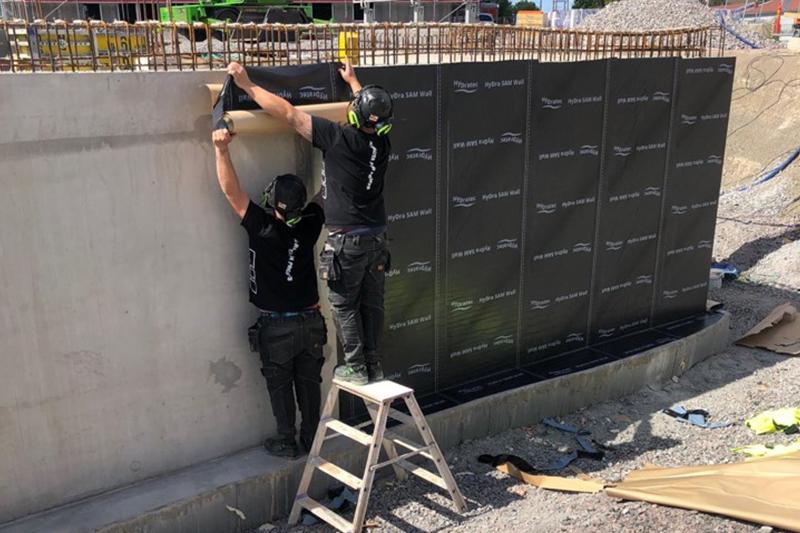
Post-applied waterproofing is installed on hardened concrete and includes both sheet membranes and liquid-applied coatings.
Common materials include:
- SBS Waterproofing Membrane: Flexible sheet membranes for specified below-grade applications.
- APP modified bitumen membranes: Bitumen-based sheets selected according to their temperature resistance and intended application.
- Self-Adhesive Waterproofing Membrane: Cold-applied sheets that bond to prepared concrete surfaces.
- Polyurethane Waterproof Coating: Liquid-applied materials that form a continuous waterproofing layer after curing.
Key technical parameters include membrane thickness, tensile strength, elongation, puncture resistance, adhesion to concrete, and crack-bridging capability. For liquid-applied products, dry-film thickness and uniform coverage are particularly important.
Performance and Construction Characteristics
Post-applied membranes bond to hardened concrete rather than fresh concrete. Their waterproofing
Compared with pre-applied systems, they do not need to withstand reinforcement installation or concrete pouring after application. However, concrete surfaces must be clean, sound, and suitable for the selected membrane.
Another important difference is accessibility. Post-applied membranes require sufficient external working space for installation and inspection. After application, the membrane also needs protection against mechanical damage during backfilling.
Typical Applications
Accessible basement walls: The exterior concrete surface can be waterproofed after wall construction.
Retaining walls: Suitable when excavation provides sufficient working space.
Existing concrete structures: Practical for basement renovation and waterproofing upgrades.
Underground roofs and podium decks: Suitable for completed concrete surfaces, subject to the specified waterproofing system.
Pre-Applied vs Post-Applied: Which Is Right for Your Project?
Use the following selection guide to identify the more suitable waterproofing approach.
| Your project condition | Recommended system | Main reason |
| Waterproofing beneath a foundation slab | Pre-Applied | Installed before concrete placement |
| Raft or mat foundation | Pre-Applied | Underside becomes inaccessible after pouring |
| Blindside basement construction | Pre-Applied | No external access after wall construction |
| Building close to property boundary | Pre-Applied | Eliminates the need for post-construction external access |
| Open excavation with accessible basement walls | Post-Applied | Allows waterproofing after concrete formation |
| Existing concrete foundation | Post-Applied | Can be applied to accessible concrete surfaces |
| Underground structure with different access conditions | Combined systems | Each structural section can use an appropriate method |
Can Pre-Applied and Post-Applied Waterproofing Be Used Together?
Yes. Combining both systems is a practical solution for projects with different structural configurations.For example, a basement project may use:
- Foundation slab: Pre-applied membrane installed over blinding concrete before the structural slab is poured.
- Accessible basement exterior walls: Post-applied membrane installed on the exterior concrete surface.
- Blindside walls: Pre-applied membrane installed against the retaining structure before concrete placement.
The transition between these systems must be carefully designed. Connections at slab-to-wall junctions, construction joints, corners, and penetrations require compatible detailing to maintain a continuous waterproofing barrier.
The selected products must also be chemically and physically compatible. Follow the manufacturer’s approved transition details rather than assuming two different membranes can be connected using standard adhesive or tape.