

What Should Be Checked Before Backfilling a Waterproofed Foundation?

Inspection of foundation waterproofing becomes tough after placing the soil around it. Any pinhole, unseamed joints, and damage to the drainage system can go unnoticed until water intrusion occurs into the building.
Prior to backfilling, it is important for contractors to ensure the membrane of waterproofing is in good condition and the protection system specified by the project is prepared along with the surrounding area being ready for backfilling.

Inspect the Waterproofing Membrane Surface
The first step is to examine the exposed membrane and identify defects before they become inaccessible.
Check for Punctures, Tears, and Surface Damage
Walk through the accessible areas and look for visible damage, including:
- Punctures caused by tools, sharp debris, or construction activities.
- Tears, cuts, scratches, or damaged membrane edges.
- Blisters, lifting, or areas where adhesion appears compromised, where relevant to the membrane system.
Take care especially when inspecting around scaffoldings, storage of materials, and other construction sites. If any damage occurs, identify the spot and ensure that it is repaired using the recommended guidelines from the membrane manufacturer.
Review Seams, Corners, and Penetrations
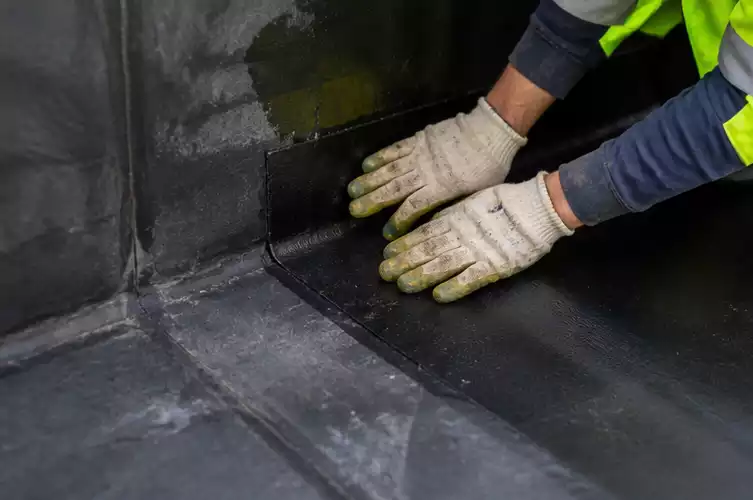
Waterproofing defects often occur where the membrane meets another surface or changes direction. Inspect laps, internal and external corners, pipe penetrations, terminations, and connections to adjacent waterproofing components.
Ensure the seams are uninterrupted and the details have been carried out through the installation technique. When inspecting welded sheet membranes, carry out the test procedure recommended for that type of system. One should not rely on what appears to be good just from seeing it from afar.
Confirm Protection and Drainage Are Ready
An intact membrane can still be damaged during backfilling. Protection and drainage components should therefore be checked before soil is placed against the foundation.
Check the Specified Membrane Protection System
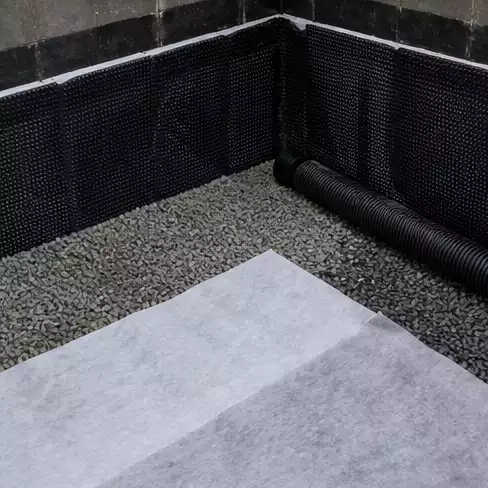
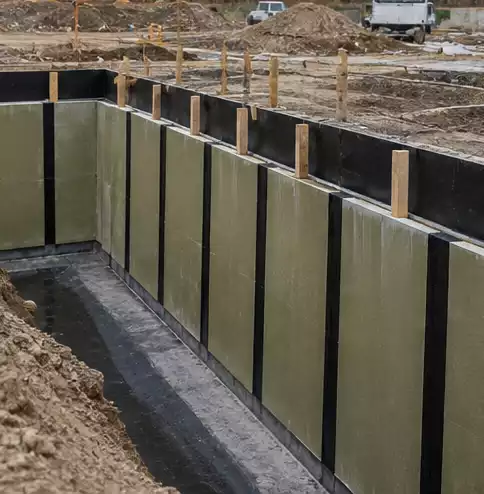
Ensure that the requisite protection boards, drainage protection mats, or any other designated material has been correctly installed. Also, ensure that they are covering the desired area without puncturing, displacing, or exposing the membrane.
Protection requirements vary with the waterproofing system, foundation design, and backfill conditions. Use the approved project details rather than selecting a protection material based on appearance alone.
Verify Drainage Components and Critical Details
In case the design entails the use of foundation drains or drainage composite system, ensure that the respective parts have been positioned as per the design specifications.
Areas adjacent to outlets of the drains, pipe joints, corner parts of the foundations, and junctions of waterproofing and drainage membranes should be checked to ascertain that drainage channels are not obstructed in any way.
Drainage does not replace waterproofing. Both systems need to perform their intended functions.
Review Backfill Materials and Site Conditions
Backfilling introduces mechanical risks that are not present during membrane installation. Material selection and equipment access should be reviewed before work starts.
Identify Sharp Debris and Potential Damage Risks
Check whether there are large sharp stones, construction waste, concrete fragments, or other items that could puncture the waterproof membrane or damage the protective layer in the backfill materials.
The backfill materials must meet the project requirements. If the drawings specify the use of backfill or drainage materials, without permission, it is not allowed to replace them with the excavated original soil randomly.
At the same time, pay attention to the gap between the foundation wall and the pit wall. If the gap is too small, it is difficult to backfill properly. During the backfilling process, it is easy to bump and disturb the protective layer, thereby damaging the entire protective structure.
Coordinate Equipment Access and Backfilling Methods
Agreement on how to deliver, place and compact soil is necessary. All excavator and compactor machinery must operate according to project requirements and without contact with the waterproofed wall.
Before work begins, confirm:
- The permitted equipment operating zones and clearances.
- The specified backfill sequence and layer thickness.
- The required compaction method near the foundation.
- Measures to prevent protection layers from shifting during placement.
The operation of heavy machinery against the foundation walls should not be done unless explicitly permitted in the approved method. The placing and compaction of backfill material should observe structural considerations and lateral load limitations.
Document Repairs Before Covering the Membrane
A final inspection should establish that identified defects have been addressed and that the work is ready for the next stage.
Record Defects and Confirm Repairs
Keep an inspection record for identifying the defects’ location, describing the problem, and recording the repairs carried out. Photographs taken before and after repairs can be used to show what is checked and can be used to reference any queries that might come up later.
Ensure that the maintenance work follows the procedures approved by the membrane material manufacturer. Depending on the system, this may require surface treatment, the use of compatible maintenance materials, seam testing or an extended curing time.
Complete Required Inspections Before Proceeding
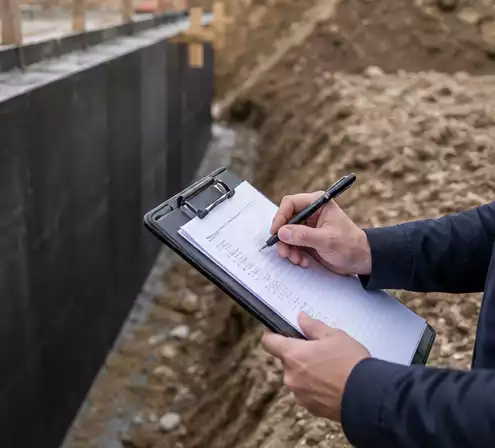
Before carrying out the backfilling work, it is necessary to carefully check each item against the project checklist and complete all the approval procedures.
The comprehensive acceptance should cover the following contents: the integrity of the waterproof membrane, the welds and perforation positions, the protective layer, the drainage components, the repair locations, as well as all the inspection and acceptance materials.
One cannot cover up the remaining problems to speed up the construction schedule. Once the membrane is buried in the soil, finding the damaged points requires excavation and rework, which is time-consuming and labor-intensive.
Final Thoughts
Foundation backfilling must not be started until the waterproof membrane, protection system, drainage systems, and other aspects of the job site have been inspected. Proper inspections and repairs, along with coordinated backfilling procedures, will help minimize the possibility of concealed damage. Adhering to the approved project specifications and the installation guidelines provided by the waterproof membrane manufacturer is crucial for long-term protection of the foundation.