

SBS vs. APP Modified Bitumen Membrane: Which One Is Right for Your Project?

SBS and APP are two widely used modifiers for bitumen membranes in roofing and waterproofing systems. Both can provide durable waterproofing protection, but they respond differently to temperature, movement, and installation conditions.
The main difference is not simply that one material is better than the other. SBS-modified bitumen is generally valued for its flexibility and elastic recovery, while APP-modified bitumen is known for its resistance to high temperatures and prolonged heat exposure. The right choice depends on the climate, roof design, expected movement, and installation requirements of the project.
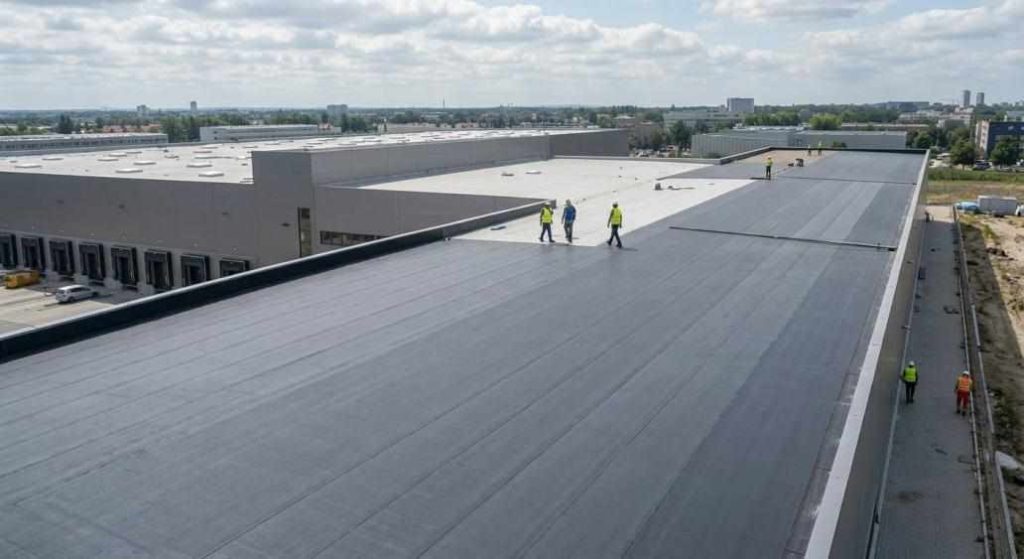
SBS vs. APP Modified Bitumen: Key Differences
Before looking at specific applications, the main performance differences can be summarized as follows:
| Performance Factor | SBS Modified Bitumen | APP Modified Bitumen |
| Flexibility and elasticity | Excellent | Moderate |
| Low-temperature performance | Excellent | Good |
| High-temperature resistance | Good | Excellent |
| Accommodation of movement | Excellent | Good |
| UV and weather exposure | Good | Excellent |
| Hot-climate applications | Suitable | Particularly suitable |
| Cold-climate applications | Particularly suitable | Suitable |
These differences come from the different ways SBS and APP modify the properties of bitumen.
How Do SBS and APP Membranes Perform in Different Climates?
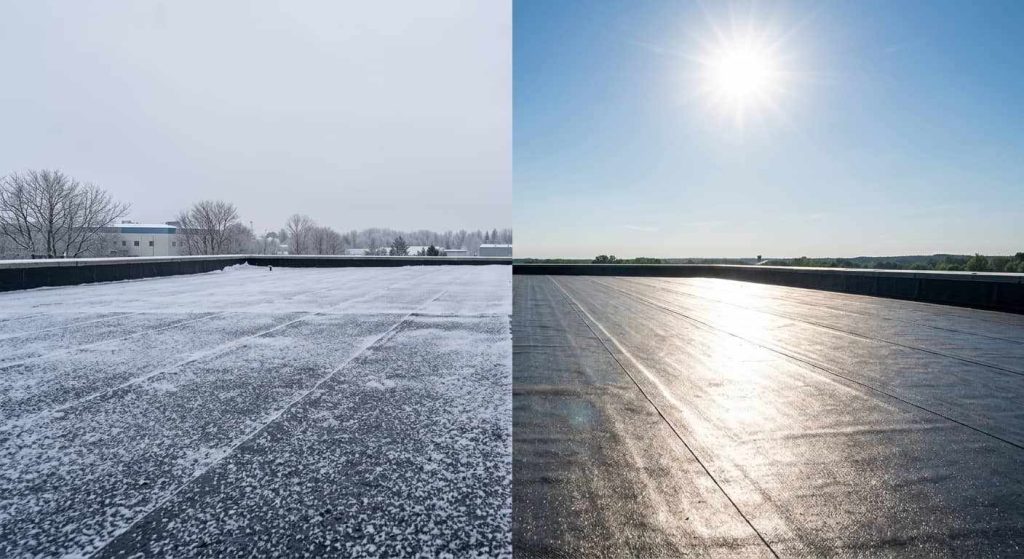
Climate is one of the most important factors when selecting a modified bitumen membrane.
SBS membranes generally perform well in cold or highly variable climates because their elastomeric properties allow the membrane to remain flexible at lower temperatures. This flexibility can help the membrane accommodate thermal expansion, contraction, and movement in the roofing assembly.
APP membranes are particularly well suited to hot and sunny environments. Their plastomeric characteristics provide good resistance to softening at elevated temperatures, making them a common choice for roofs exposed to intense sunlight and high surface temperatures.
SBS vs. APP for Roofing Applications
The type of roof and its expected service conditions also influence the choice between SBS and APP.
For roofs where substrate movement, thermal cycling, or low-temperature flexibility is a major concern, SBS can be an appropriate choice. Its elastic characteristics allow it to accommodate movement more readily, which can be valuable where the membrane needs to remain flexible as the roof assembly expands and contracts.
APP membranes can be advantageous for exposed roofing applications where resistance to high temperatures and prolonged solar exposure is important. They are commonly used in flat and low-slope roofing systems, particularly in environments where the roof surface can become very hot.
Neither material should be assigned to only one type of roof. The final selection also depends on the membrane thickness, reinforcement, surface finish, roof build-up, and applicable project specifications.
SBS vs. APP Installation: What Is the Difference?
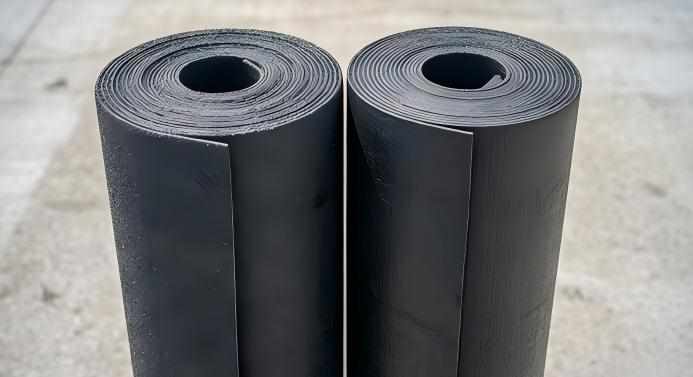
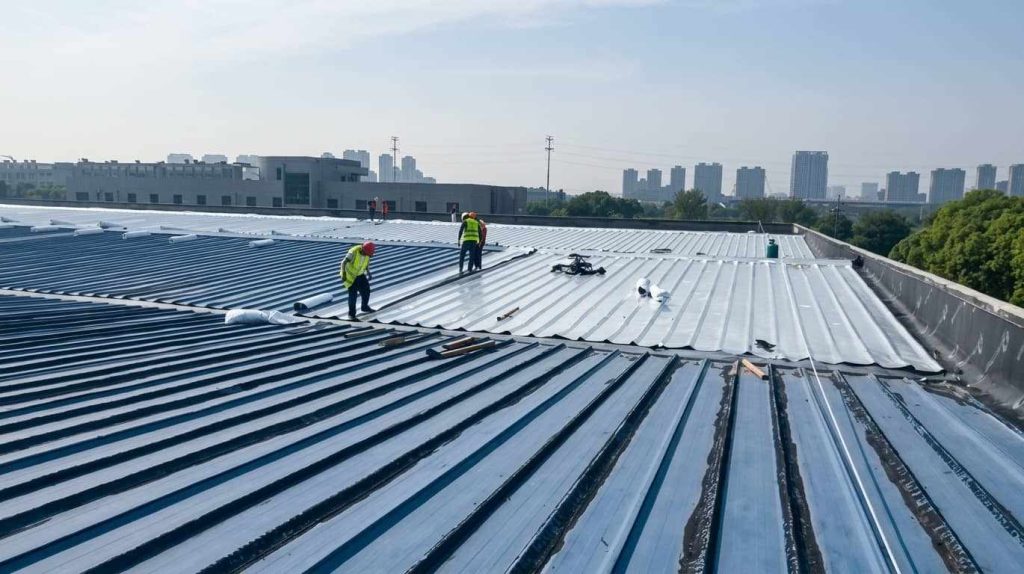
The construction requirements for different products vary. Please strictly follow the technical instructions provided by the manufacturers for construction. SBS and APP waterproofing sheets have multiple compatible systems and can be laid using different methods, including hot-melt spraying and hot-melt welding. Some models also support self-adhesive construction.
During hot-melt spraying construction, there are significant differences in the performance of APP modified bitumen and SBS sheets when heated. APP modified bitumen has excellent high-temperature stability and is commonly used in hot-melt spraying roofing systems. Although SBS sheets can also be hot-melt sprayed, due to the elasticity of the material itself, construction personnel must precisely control the heating degree to ensure a reliable bond and prevent the sheets from being damaged due to overheating.
No matter which type of sheet is chosen, the construction quality is of paramount importance. Pre-treatment of the base layer, joint seams, heating control, sheet alignment, as well as perforation positions and roof edge finishing, all these details will directly determine whether the waterproof system can function stably for a long time.
SBS or APP: Which Modified Bitumen Membrane Should You Choose?
There is no universal winner between SBS and APP. The better option depends on what the membrane needs to withstand during its service life.
SBS may be the better choice when:
- Low-temperature flexibility is important
- The roof or substrate is expected to experience movement
- Thermal expansion and contraction are significant
- Freeze-thaw conditions are a concern
- Elasticity and crack-bridging capability are priorities
APP may be the better choice when:
- High-temperature resistance is a major requirement
- The membrane will receive prolonged solar exposure
- The project is located in a hot climate
- Resistance to softening at elevated temperatures is important
- The roofing system is designed for exposed applications
When dealing with projects with complex conditions and strict standards, one cannot merely rely on the type of modifier. It is necessary to comprehensively select the type based on the complete parameters of the sheet material and the entire roofing system. Before finalizing the plan, it is essential to verify all technical indicators: low-temperature flexibility, heat resistance, tensile strength, reinforcing material of the sheet, sheet thickness, and the applicable standards and specifications.
Huayu SBS and APP Modified Bitumen Membranes
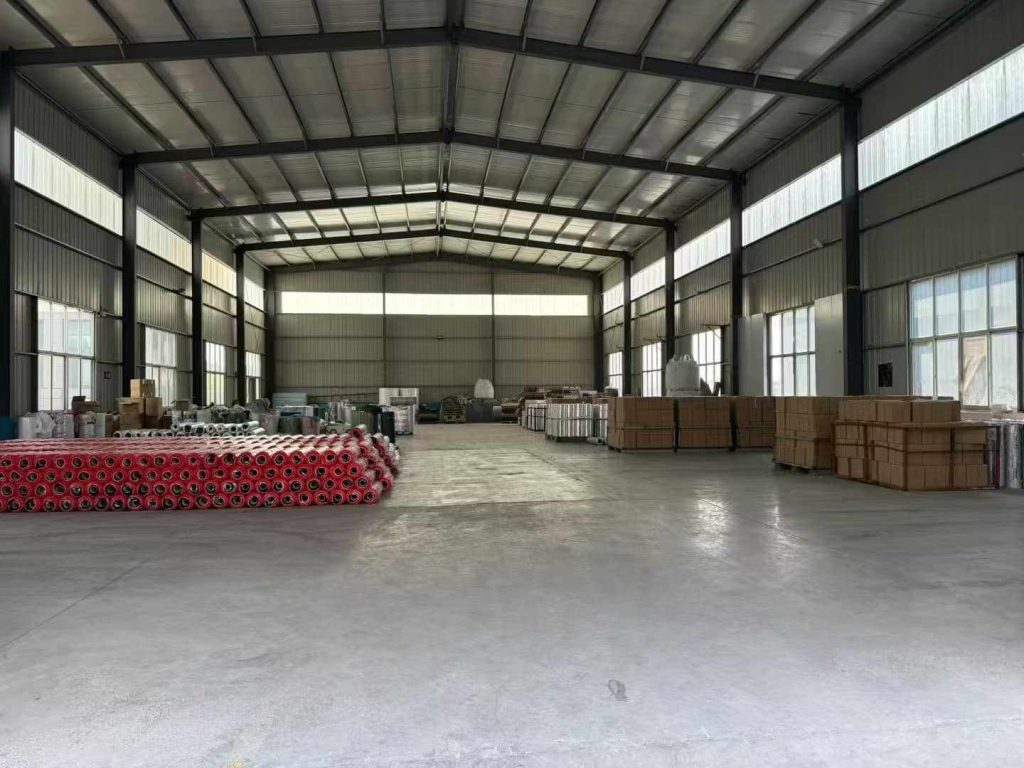
Huayu Waterproofing supplies both SBS and APP modified bitumen membranes for different roofing and waterproofing requirements. Offering both material types allows project buyers to select a membrane according to climate, application conditions, performance requirements, and system design.
For a project exposed to low temperatures or significant structural and thermal movement, an SBS-modified membrane may provide the flexibility required. For applications where high-temperature stability and prolonged solar exposure are key concerns, an APP-modified membrane may be more appropriate.
The appropriate membrane specification ultimately depends on the project. By considering the climate, roof conditions, installation method, and required performance together, buyers can select a modified bitumen membrane that is better suited to the expected service environment.