
Polyurethane vs Bitumen Waterproofing: Which One Should You Choose?

There is no universal standard answer for the waterproofing system. Both polyurethane and bitumen are commonly used materials for waterproofing protection in buildings and structures. Their mechanisms of resisting water damage are different, and the applicable project scenarios also vary.
When comparing polyurethane and bitumen waterproofing, it is not possible to simply determine which material is absolutely superior. The base material, construction techniques, deformation of the base surface, exposed usage environment, project volume, and on-site installation conditions all influence the final selection of the material.
Polyurethane vs Bitumen Waterproofing: Key Differences
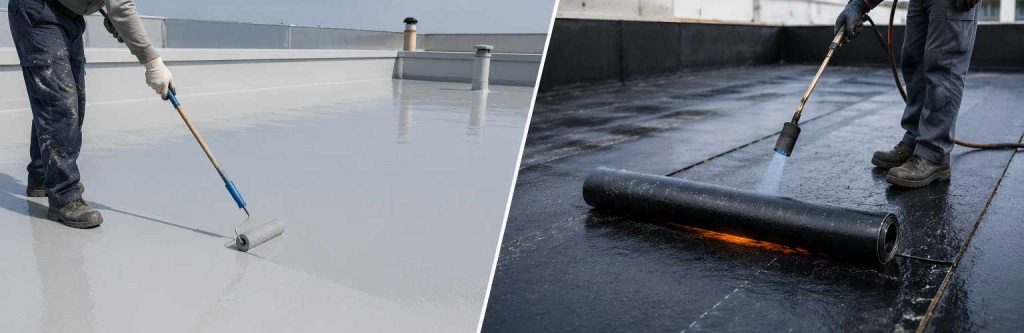
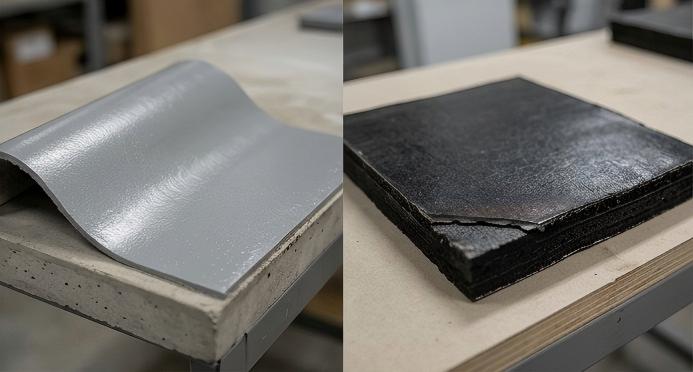
Polyurethane waterproof coating belongs to liquid-type waterproof materials. After curing, it will form a complete and seamless protective layer with flexibility. Although bitumen waterproof materials also have liquid coating varieties, in actual engineering projects, they are more often in the form of sheets and laid on the pre-treated base surface.
The main differences can be summarized as follows:
| Factor | Polyurethane Waterproof Coating | Bitumen Waterproofing |
| Application | Liquid-applied coating | Membrane or liquid-applied |
| Waterproofing layer | Seamless after application | Sheet membranes require overlaps and joints |
| Flexibility | Generally highly flexible | Depends on the specific membrane/system |
| Complex details | Well suited to irregular surfaces | Requires careful detailing at joints and penetrations |
| Crack bridging | Generally good | Depends on product formulation |
| Application methods | Brush, roller, or spray | Torch-applied, self-adhesive, or other methods |
| UV exposure | Depends on formulation | Exposed bitumen may require additional protection |
| Typical applications | Roofs, concrete structures, decks, industrial areas | Foundations, basements, roofs, and large areas |
| Cost considerations | May have a higher material cost | Often competitive for large-scale projects |
This table provides a general comparison, but the actual performance depends on the specific product and the waterproofing system. The product formula, substrate treatment, coating thickness and construction quality all affect the final outcome.
Where Polyurethane Waterproofing Has an Advantage
One of the core advantages of polyurethane waterproofing is seamless coating. Unlike traditional waterproofing sheets that require overlapping and joining, liquid coatings can cover the base surface continuously. For complex nodes such as corners, drainage outlets, pipes, and seams, the performance is particularly outstanding.
Complex Surfaces and Penetrations
Most waterproofing failures occur at detailed nodes. Pipes, drainage outlets, corners, and irregular substrates will significantly increase the difficulty of sheet installation.
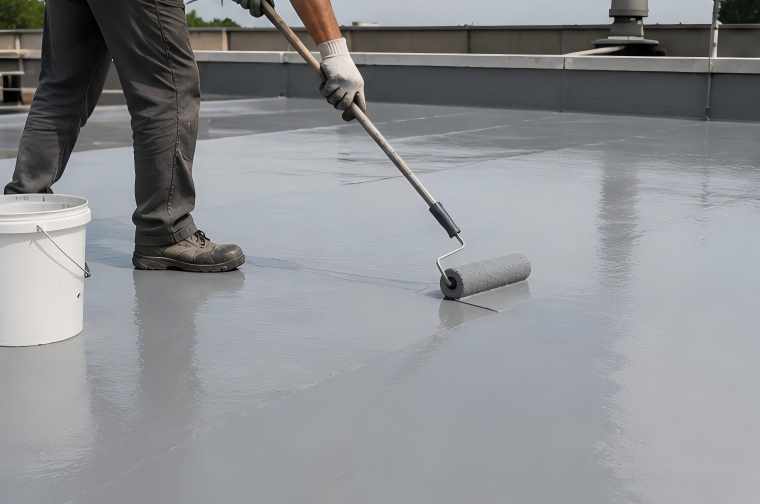
Polyurethane waterproofing coatings are liquid and can fit various substrate shapes. After proper application, a complete and continuous waterproof protective layer can be formed.
Flexibility and Substrate Movement
Building concrete structures will undergo thermal expansion and contraction due to temperature and structural displacement.
The elastic polyurethane coating can withstand a certain degree of substrate deformation, maintaining the integrity of the waterproof layer. For situations with high requirements for crack bridging and flexible deformation resistance, polyurethane is the preferred material.
Chemical and Environmental Exposure
Some construction projects will come into contact with corrosive media such as chemicals and oil stains. At this time, the chemical resistance of the coating is of crucial importance.
The polyurethane waterproof system can meet the specific chemical resistance requirements of some industrial and commercial scenarios. However, before actual use, it is necessary to combine the on-site conditions and check the technical parameters of the manufacturer to confirm the material compatibility.
Renovation and Repair Projects
Liquid polyurethane coatings are also suitable for the renovation and repair of existing buildings. They are particularly suitable for construction scenarios where the base surface structure is complex and if using sheet materials, a large amount of cutting and splicing is required.
Where Bitumen Waterproofing May Be the Better Choice
Polyurethane is not automatically the best option for every project. Bituminous waterproofing remains a widely used solution, particularly where established membrane systems and large-area installation methods are preferred.
Large-Area Waterproofing
Bituminous membranes can be practical for large and relatively straightforward surfaces. Sheet membranes provide a defined waterproofing layer and are widely used in applications such as foundations, basements, and certain roofing systems.
For large projects, the overall installation method, labor requirements, material cost, and project schedule can be just as important as the material's individual properties.
Established Membrane Systems
Bitumen waterproofing has been used in construction for decades, and there are many established products, installation methods, primers, protection layers, and accessories available.
For contractors already experienced with bituminous membrane systems, this familiarity can be an important practical advantage.
Below-Grade Waterproofing
Foundations and basement structures have different waterproofing requirements because they may be exposed to constant soil moisture or hydrostatic pressure.
Bituminous membranes are commonly used in these environments, although the appropriate solution depends on the structure, water exposure, substrate, drainage design, and complete waterproofing system.
Cost Considerations
Project cost is another factor when comparing polyurethane vs bitumen waterproofing. Bituminous systems can be competitive for large-scale applications, particularly when conventional membrane installation methods are already established.
However, comparing only the material price can be misleading. Labor, surface preparation, installation time, detailing, protection, and future maintenance should also be considered when evaluating the total project cost.
Polyurethane vs Bitumen for Common Waterproofing Applications
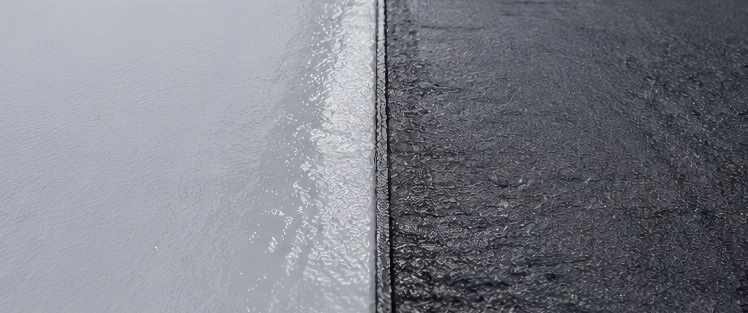
The best choice can change depending on where the waterproofing system will be installed.
Roof Waterproofing
For roofs with many penetrations, corners, or complicated details, a liquid-applied polyurethane system can offer advantages because it can create a seamless layer around these areas.
For large, relatively straightforward roof surfaces, bituminous membranes can also provide a practical and established waterproofing solution.
Basement and Foundation Waterproofing
Below-grade structures require careful consideration of water pressure, substrate condition, drainage, joints, and membrane protection.
Bituminous membranes are commonly used for foundations and basements, while polyurethane systems may also be considered when their application and performance characteristics match the project requirements.
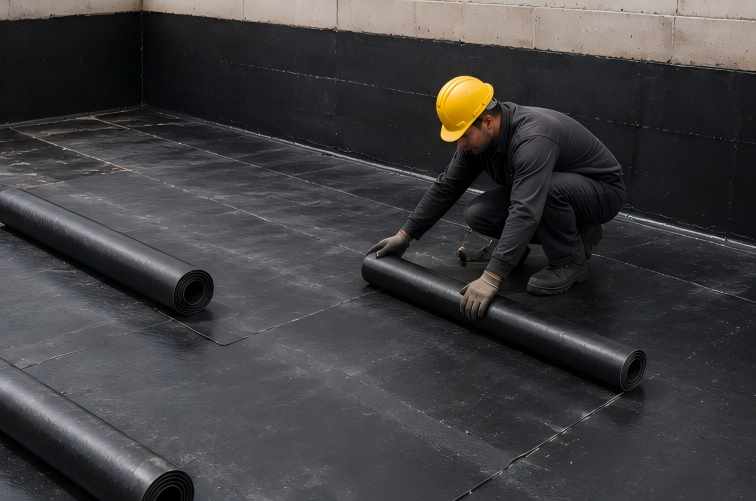
Concrete Structures
The concrete base surface needs to be particularly focused on the bond strength, the moisture content of the base layer, the base surface treatment, the structural displacement, and the crack bridging capability.
If a flexible liquid waterproof system is required for the project, polyurethane waterproof coating is very suitable. However, before construction, the condition of the concrete base surface must be evaluated, and the manufacturer's construction specifications must be strictly followed.
Industrial and Commercial Areas
Industrial and commercial scenarios often encounter additional working conditions such as chemical corrosion, wear and tear, vehicle passage, and frequent maintenance.
In such scenarios, when high requirements are placed on seamless protection, flexibility, and chemical corrosion resistance, polyurethane coatings can be selected; if the main requirement is large-area waterproofing, traditional sheet materials can meet the needs, and the bituminous systems is also feasible.
So, when it comes to waterproofing projects, how should we choose materials?
There is no universal solution. For achieving seamless coating, high flexibility, handling complex joints, or requiring specific chemical corrosion resistance, polyurethane waterproof coatings should be given priority. While bitumen waterproofing is more suitable for large-scale projects, existing membrane systems, and most underground engineering scenarios.
If you are unsure about the appropriate waterproofing solution for the project, you can contact professional manufacturers and conduct a comprehensive assessment based on the base layer conditions, construction environment, and performance requirements. Huayu Waterproofing mainly deals with waterproof membranes and coatings, and can provide product selection references and technical support for various waterproofing projects.