

How to Waterproof a Concrete Roof: Complete Concrete Roof Waterproofing Guide

How to Waterproof a Concrete Roof: Complete Concrete Roof Waterproofing Guide
Although concrete roofs have excellent durability, concrete itself does not have waterproofing capabilities. Over time, due to long-term rain erosion, ultraviolet radiation, temperature variations, and structural displacement, the protective layer of the roof will gradually be worn down. Water seeps through cracks, joints, and porous surfaces and enters the interior. Minor leaks will gradually lead to water damage, mold growth, and steel reinforcement corrosion, resulting in high costs for structural maintenance.
Most existing concrete roofs can be repaired with the help of appropriate waterproofing systems. Whether the roof has aged or you want to extend its lifespan, choosing the right waterproofing solution and conducting proper construction are equally crucial.
This article covers the assessment of the current state of concrete roofs, the selection of roof waterproof membranes and various waterproof systems, the construction process of the foundation, as well as the core performance requirements for a qualified waterproof roof.
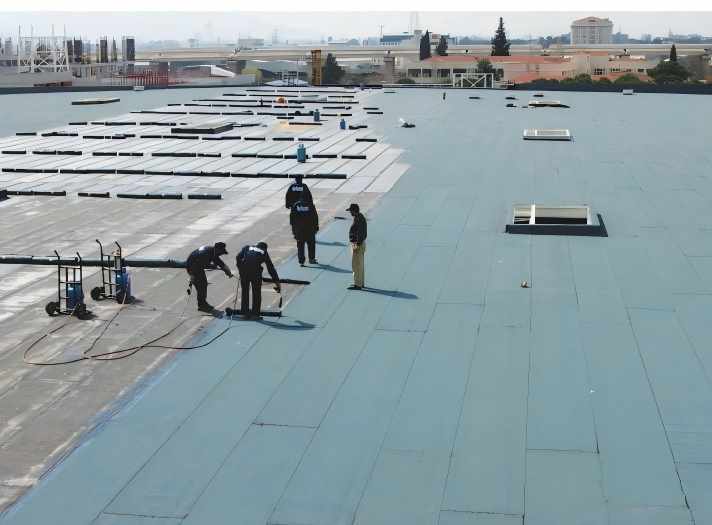
Assess the Condition of Your Concrete Roof
Before choosing waterproof materials, determine whether only local repairs are needed for the roof or if an entire waterproofing system replacement is required. Directly applying waterproofing on hidden damaged and aged surfaces is prone to premature failure.
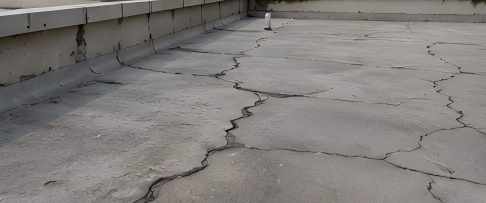
Visible Cracks
Minor cracks often occur in aged concrete roofs, and they are not necessarily related to structural issues. However, wide cracks or continuously expanding cracks can allow water to seep beneath the waterproof layer. Therefore, all cracks must be repaired before construction.
Ponding Water
The accumulated water after rain should be removed promptly. If the water accumulation persists for a long time, it indicates that the roof slope is insufficient or the drainage is not smooth, which will accelerate the aging of the waterproof layer and increase the probability of leakage.
Existing Waterproofing Layer
Check the current waterproofing: peeling of coating, bubbling of membrane, loosening of seams, holes, detachment of waterproof layer. Minor damages can be repaired, but large-scale damage requires complete replacement.
Signs of Interior Water Damage
Ceiling water stains, paint peeling, wall moisture, mold growth, indicate that water has entered the roof. The indoor leakage traces and the actual point of water entry on the roof may be several meters apart. It is essential to conduct a comprehensive inspection of the roof.
After completing the roof assessment, an appropriate waterproofing solution can be selected.
Choose the Right Waterproofing Solution
There is no universal waterproofing system that works for every concrete roof. The best choice depends on the roof's condition, expected service life, climate, maintenance requirements, and project budget.
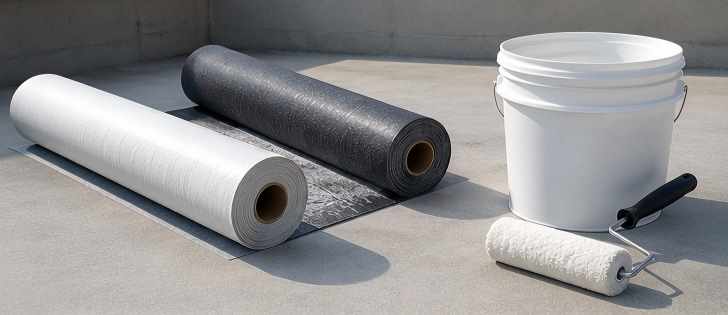
For most renovation projects, the decision usually comes down to choosing between a roof waterproofing membrane and a liquid waterproof coating.
| Roof Condition | Recommended Solution | Why |
| Large flat concrete roof with widespread aging | PVC or TPO waterproof membrane | Excellent long-term durability, UV resistance, and weather performance |
| Roof with localized leaks or minor surface defects | Waterproof roof coating | Suitable for targeted repairs and irregular surfaces |
| Roof requiring minimal disruption during renovation | Self-adhesive waterproof membrane | Faster installation without torch application |
| Concrete roof with expected structural movement | SBS modified bitumen membrane | Better flexibility and crack-bridging ability |
| Roof exposed to intense sunlight | PVC or TPO membrane | Superior UV resistance and long service life |
Roof Waterproofing Membrane
The membrane system can create a complete and continuous waterproof barrier on the roof. Modern membranes such as PVC, TPO, EPDM, and SBS modified asphalt are widely used in commercial buildings, industrial plants, warehouses, and residential concrete roofs.
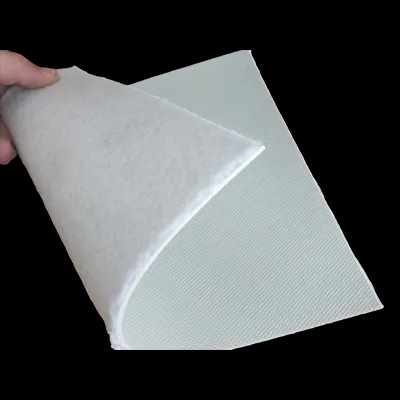
Compared to waterproof coatings, membranes have the following advantages:
- Longer service life
- Excellent puncture resistance
- Better weather resistance
- More stable waterproof performance on large roof surfaces
For the overall renovated roof, the membrane system is often the more ideal and long-lasting solution.
Waterproof Roof Coating
The liquid waterproof coating can be directly applied to the concrete base surface and, after curing, forms a seamless overall protective layer.
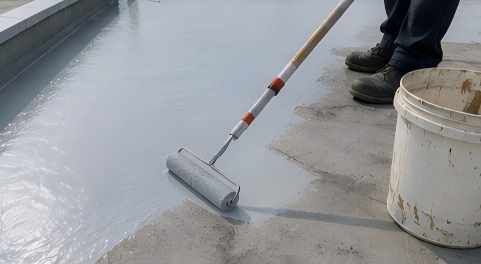
They are particularly useful for:
- Repairing localized leaks
- Roofs with numerous pipes, corners, or penetrations
- Projects where installing sheet membranes is difficult
- Maintenance work on existing waterproof systems
Although liquid coatings are suitable for complex construction areas, their performance and effect highly depend on the quality of the base surface treatment and the standard coating thickness.
The selection of waterproofing materials is not simply about choosing expensive products; the key lies in matching the actual conditions of the roof and selecting the appropriate waterproofing system.
How to Waterproof a Concrete Roof
After selecting the appropriate waterproofing system, standard construction is the key to ensuring long-term usage effectiveness. There are differences in construction methods for different materials, but most concrete roof waterproofing projects follow the following basic process.
Step 1: Prepare the Roof Surface
Begin by removing dirt, dust, grease, loose concrete, vegetation, and any deteriorated waterproofing materials. A clean, stable surface allows the new waterproofing system to bond properly.
If an old waterproof layer is severely damaged or no longer adheres to the concrete, it should be removed before installing a new system.
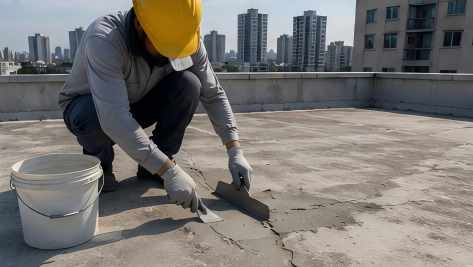
Step 2: Repair Cracks and Surface Defects
Select appropriate repair materials to seal the cracks, honeycomb holes and damaged areas of the concrete, and carry out leveling treatment for the uneven areas to provide a flat base surface for the waterproof layer.
If this repair process is omitted, the moisture will bypass the new waterproof layer and cause leakage.
Step 3: Apply Primer (If Required)
Many waterproofing systems require a primer to improve adhesion between the concrete and the waterproof material. Follow the manufacturer's recommendations regarding primer type and drying time.
Step 4: Install the Waterproofing System
The construction techniques vary depending on the type of waterproofing material.
When using sheet waterproofing, precisely align the sheets and strictly control the lap width. Seal all seams according to the product technical requirements.
For waterproof coatings, apply multiple coats at the specified thickness, ensuring complete coverage without pinholes or missed areas.
Pay special attention to roof edges, expansion joints, drains, pipes, and penetrations, as these are common locations for future leaks.
Step 5: Inspect the Finished Waterproofing Layer
After installation, inspect the entire roof for incomplete seams, air bubbles, damaged areas, or insufficient coating thickness.
Many commercial projects also perform a flood test or other waterproof integrity test before the roof is placed back into service.
Careful inspection helps identify small issues before they become expensive repairs.
How Long Does Concrete Roof Waterproofing Last?

The service life of the waterproof layer is not solely determined by the material itself. Factors such as construction quality, climatic conditions, ultraviolet rays, drainage conditions and regular maintenance can significantly affect its long-term performance.
Under normal service conditions, typical lifespans are:
| Waterproofing System | Typical Service Life* |
| Waterproof roof coating | 5–10 years |
| SBS modified bitumen membrane | 10–15 years |
| Self-adhesive membrane | Around 10–15 years |
| PVC waterproof membrane | 20 years or more |
| TPO waterproof membrane | 20 years or more |
The actual lifespan is jointly determined by product quality, construction techniques, external environment and operation and maintenance conditions.
Regularly inspecting the roof, promptly repairing minor damages, and ensuring smooth drainage can effectively extend the service life of the concrete roof waterproofing system.