


Pre-Applied & Wet-Laid Waterproofing Membrane
pre-applied waterproofing membrane
Product Overview
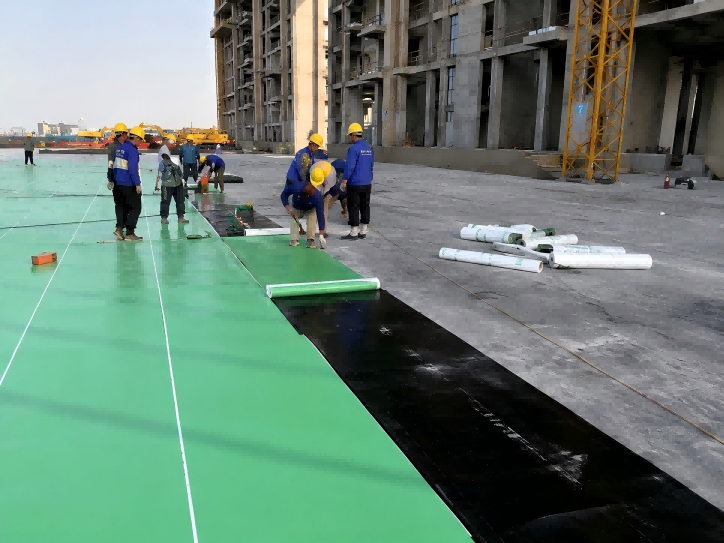
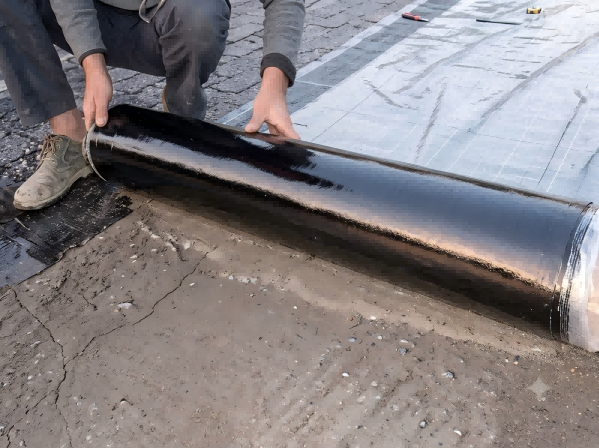
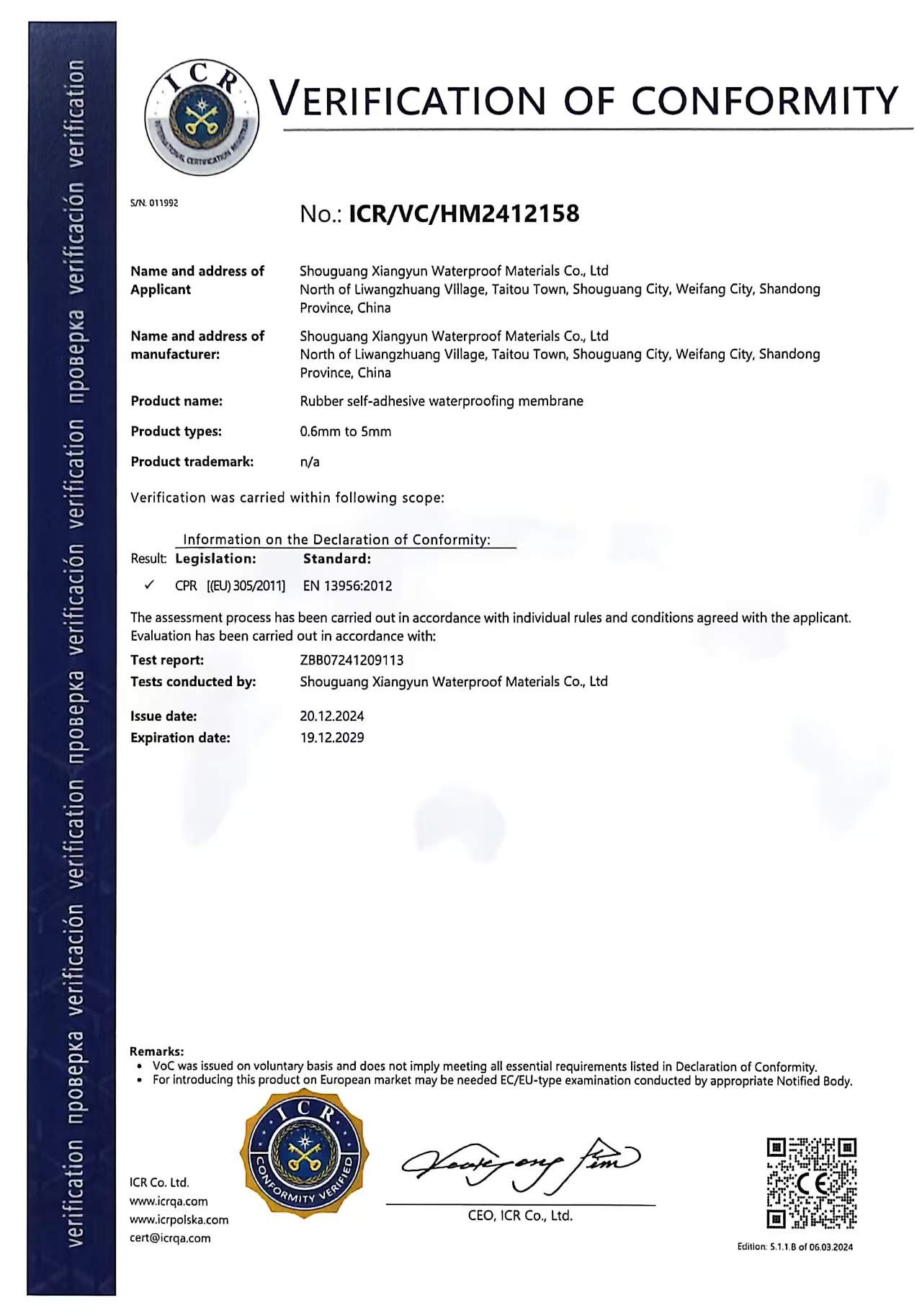
Pre-applied PY type (polyester mat): The wide-width self-adhesive pre-applied polyester mat waterproofing membrane is made of bitumen-based polyester mat membrane as the main material (with functional additives), coated with a self-adhesive layer on both sides, and provided with a removable silicone-coated film as the release material.
Pre-applied P-type (polymer): The wide-width self-adhesive polymer pre-applied waterproofing membrane is made of ethylene-vinyl acetate (EVA) or high-density polyethylene (HDPE) homogeneous sheet as the main material, with a self-adhesive layer coated on the surface, and covered with a silicone-coated release film. If required by the project, geotextile can be laminated onto the polymer layer to reinforce the membrane.
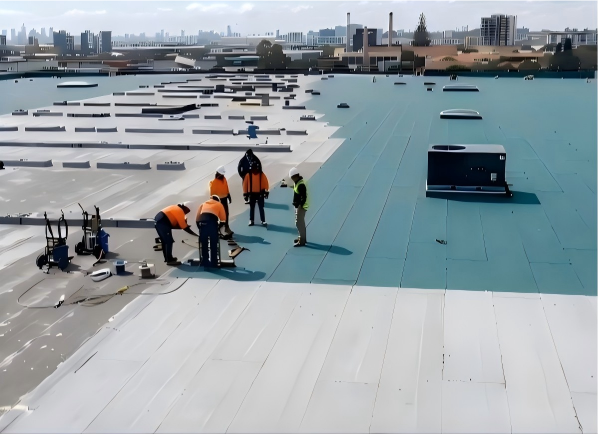
Wet-applied polyester mat membrane: The wide-width wet-applied polyester mat waterproofing membrane is made of bitumen-based polyester mat membrane as the main material (with functional additives), coated with a self-adhesive layer on one or both sides, and provided with a removable silicone-coated film as the release material.
Application Method
1. Construction process flow
Clean substrate → Mark positioning lines → Apply sealing tape → Detail treatment → Lay membrane → Seal with sealant → Self-inspection → Submit for approval
2. Construction procedures
Product Classification
| Application Method | Main Material | Adhesive Surface | Performance Type | Main Material Thickness | Total Membrane Thickness |
| Pre-applied (Type Y) | Polymer waterproofing membrane (Type P) | Single-sided (S) Double-sided (D) | – – | 0.7 mm | 1.2 mm |
| 1.2 mm | 1.7 mm | ||||
| 2.0 mm | 2.0 mm | ||||
| Bitumen-based polyester mat waterproofing membrane (Type PY) | Double-sided (D)) | – – | – – | 4.0 | |
| Wet-applied (Type W) | Polymer waterproofing membrane (Type P) | Single-sided (S) Double-sided (D) | Type I and Type II | – – | 1.21.52.0 |
| Bitumen-based polyester mat waterproofing membrane (Type PY) | Double-sided (D)) | Type I and Type II | – – | 3.04.0 |
Performance Complies with standard GB/T23457-2017 “Pre-applied waterproofing membrane”.
| No. | Parameter | Index | |||
| P | PY | R | |||
| 1 | Soluble content (g/m2 ) ≥ | – | 2900 | – | |
| 2 | Tensile properties | Tensile force (N/50mm) ≥ | 600 | 800 | 350 |
| Tensile strength / Mpa ≥ | 16 | – | 9 | ||
| Elongation at break of membrane(%) ≥ | 400 | – | 300 | ||
| Elongation at max. tensile force(%)≥ | – | 40 | – | ||
| Phenomenon during stretching | No separation of adhesive layer from substrate or carrier | ||||
| 3 | Nail tear strength(N) ≥ | 400 | 200 | 130 | |
| 4 | Elastic recovery rate /% ≥ | – | – | 80 | |
| 5 | Puncture resistance / N ≥ | 350 | 550 | 100 | |
| 6 | Impact resistance (0 . 5kg. m) | No leakage | |||
| 7 | Static load | 2 0 kg, No leakage | |||
| 8 | Heat resistance | 80℃ ,2h no displacement, flow, or drip | 70℃ ,2h no displacement, flow, or drip | 100℃ ,2h no displacement, flow, or drip | |
| 9 | Low temperature bending | Substrate: -35°C, no cracks | – | Substrate: -35°C, no cracks | |
| 10 | Low temperature flexibility | Adhesive layer: -25°C, no cracks | -20°C, no cracks | – | |
| 11 | Oil migration (sheets) ≤ | 1 | 2 | 1 | |
| 12 | Water migration resistance (hydraulic gradient) | 0.8 Mpa/ 3 5 mm, 4 h no migration | |||
| 13 | Water impermeability(0 . 3 Mpa, 1 2 0 min) | No leakage | |||
| 14 | Peel strength to fresh concrete/ (N/ mm) | Untreated ≥ | 1.5 | 1.5 | 0.8, cohesive failure |
| After water immersion ≥ | 1.0 | 1.0 | 0.5, cohesive failure | ||
| Sand-contaminated surface ≥ | 1.0 | 1.0 | 0.5, cohesive failure | ||
| UV aged ≥ | 1.0 | 1.0 | 0.5, cohesive failure | ||
| Heat treated ≥ | 1.0 | 1.0 | 0.5, cohesive failure | ||
| 15 | Shear strength to fresh concrete ( N/ mm) ≥ | 1.0 | 1.0 | 0.5, cohesive failure | |
| 16 | Peel strength of membrane-to-membrane (overlap)/(N/mm) | Untreated ≥ | 0.8 | 0.8 | 0.6 |
| After water immersion ≥ | 0.8 | 0.8 | 0.6 | ||
Performance Complies with standard GB/T35467-2017 “Wet-applied waterproofing membrane”.
| No. | Parameter | Index | |||
| H | E | PY | |||
| 1 | – | 2100 | |||
| 2 | Tensile properties | Tensile force (N/50mm) ≥ | 300 | 200 | 500 |
| Elongation at max. tensile force(%) ≥ | 50 | 180 | 30 | ||
| Phenomenon during stretching | No separation of adhesive layer from substrate or carrier | ||||
| 3 | Tear force / N ≥ | 20 | 25 | 200 | |
| 4 | Heat resistance(70℃ , 2h) | No flow, drip, or slip ≤ 2 mm | |||
| 5 | Low temperature flexibility ( – 2 0 ℃ ) | No cracks | |||
| 6 | Water impermeability(0 . 3 Mpa, 1 2 0 min) | No leakage | |||
| 7 | Peel strength of membrane-to-membrane (overlap)/ (N/ mm) | Untreated ≥ | 1.0 | ||
| After water immersion ≥ | 0.8 | ||||
| After heat treatment ≥ | 0.8 | ||||
| 8 | Oil migration (sheets) ≤ | 2 | |||
| 9 | Tack retention / min ≥ | 30 | |||
| 10 | Peel strength to cement mortar / (N/mm) | Untreated ≥ | 1.5 | ||
| After heat treatment ≥ | 1.0 | ||||
| 11 | Peel strength to cement mortar after water immersion / ( N/ mm) | 1.5 | |||
| 12 | Heat aging(70℃ , 168h) | Tensile force retention /% ≥ | 90 | ||
| Elongation retention /% ≥ | 80 | ||||
| Low temperature flexibility( – 1 8 ℃ ) | No cracks | ||||
| 13 | Dimensional change /% ≤ | ± 1.0 | ± 1. 5 | ± 1. 5 | |
| 14 | Heat stability | No blistering, flowing; edge curling of polymer film or carrier shall not exceed 1/4 of the side length 1/4 | |||
Why Leading Construction Contractors Choose Huayu Waterproofing “富象FU XIANG ™
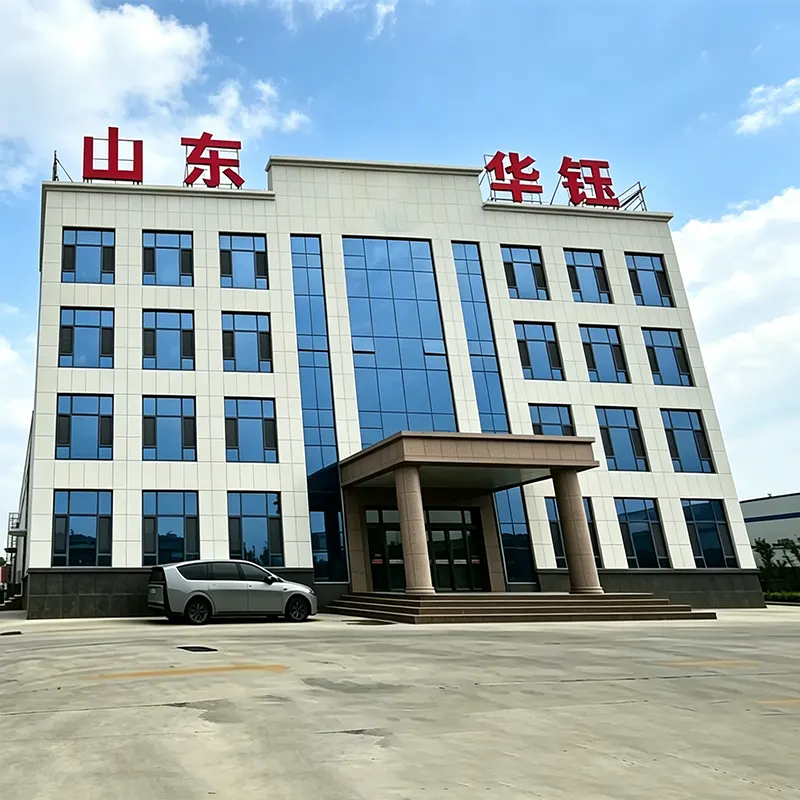
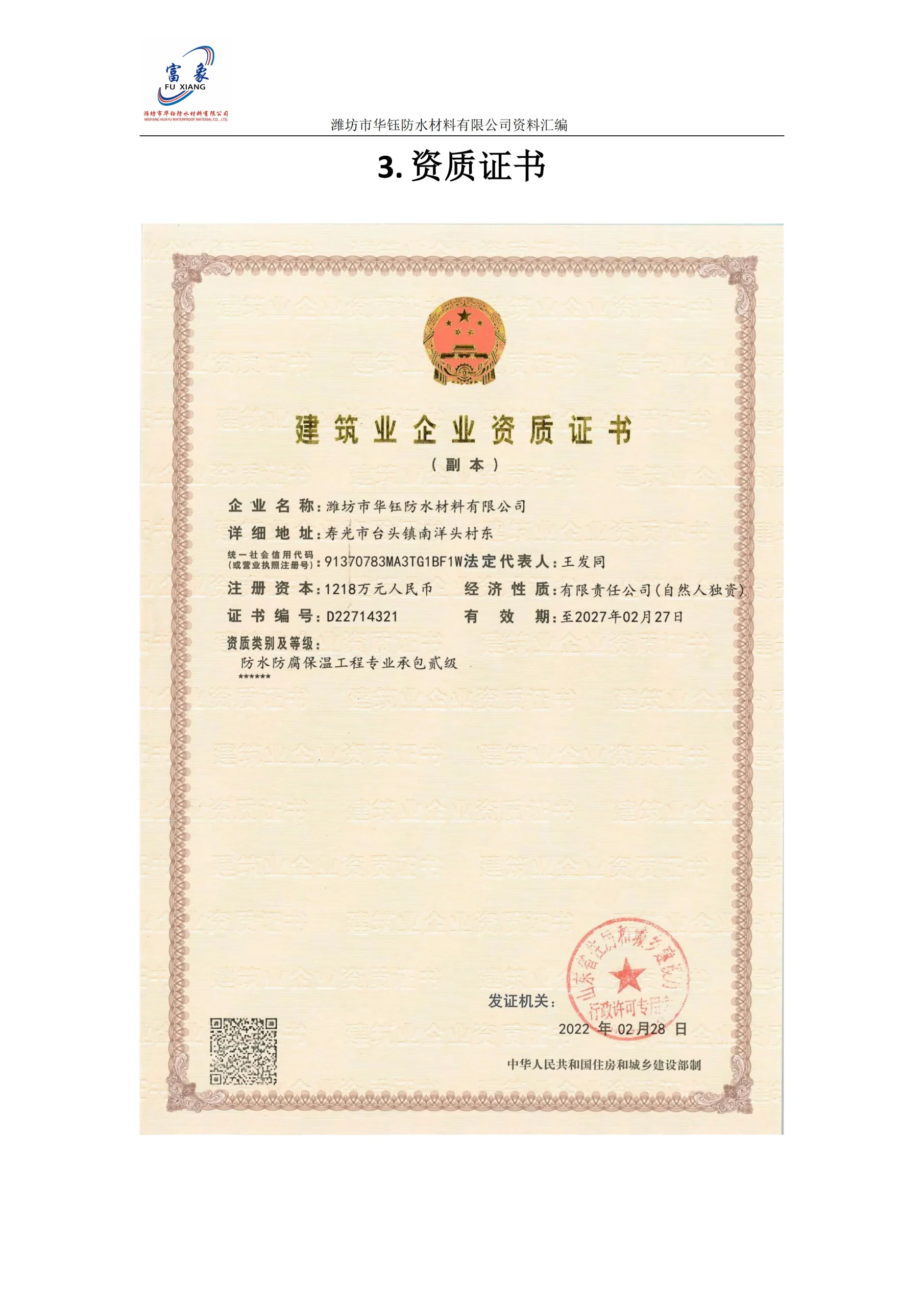
Huayu Waterproofing holds the National Class II Qualification for Professional Contracting of Building Waterproofing Engineering.
We provide Free Sample Books (A4 size with multi-thickness samples) for qualified commercial buyers.




since 2020
SBS & APP Membranes
Modified Membranes
Premium Asphalt Shingles
PE/PP Membranes
Let us know what you need
WhatsApp:+8613792181135 / +8615092092661
Email:[email protected]
Email:[email protected]
Phone:+8613792181135 / +8615092092661